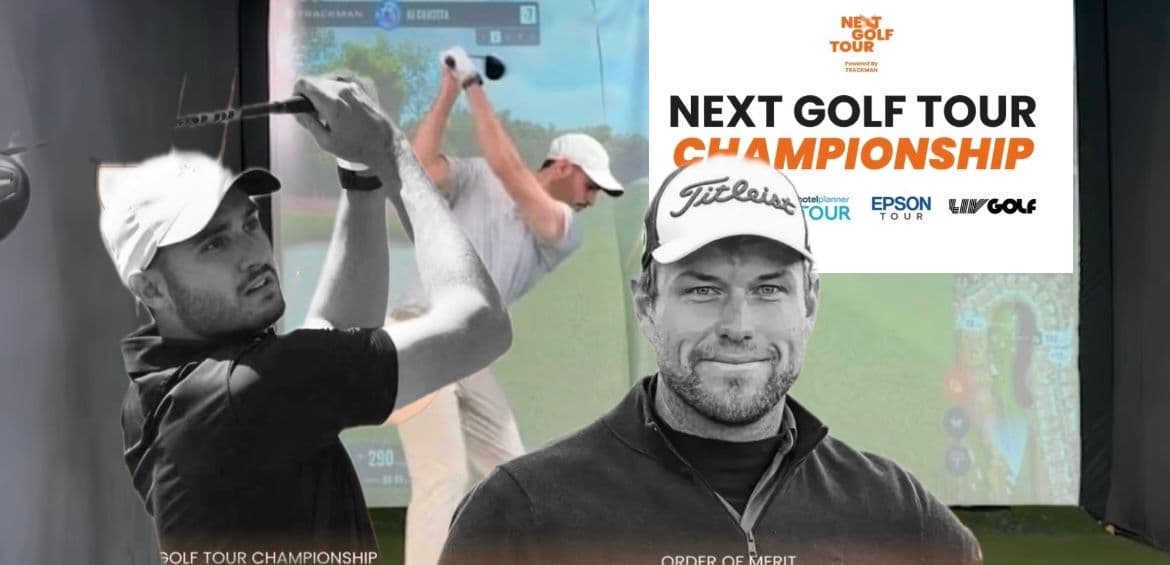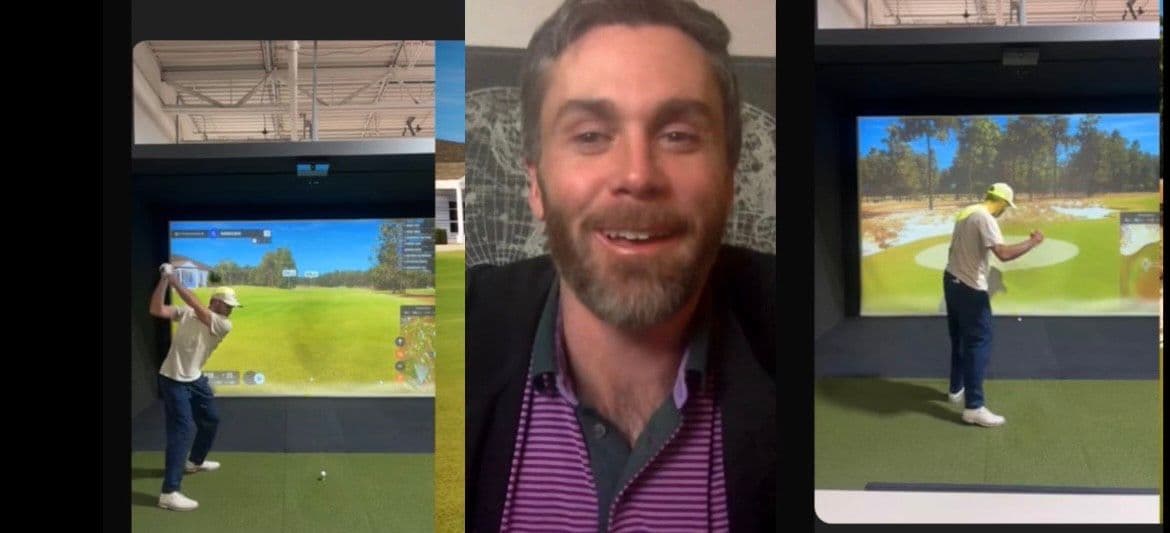

The second World Series event on the NEXT Golf Tour begins at Pinehurst No. 2 this week. You won’t see it on ESPN, but you can watch every shot online. About 300 qualifying players will tee it up on Trackman simulators around the world, competing for a $30,000 winner’s check, a DP World Tour exemption, and HotelPlanner Tour starts.
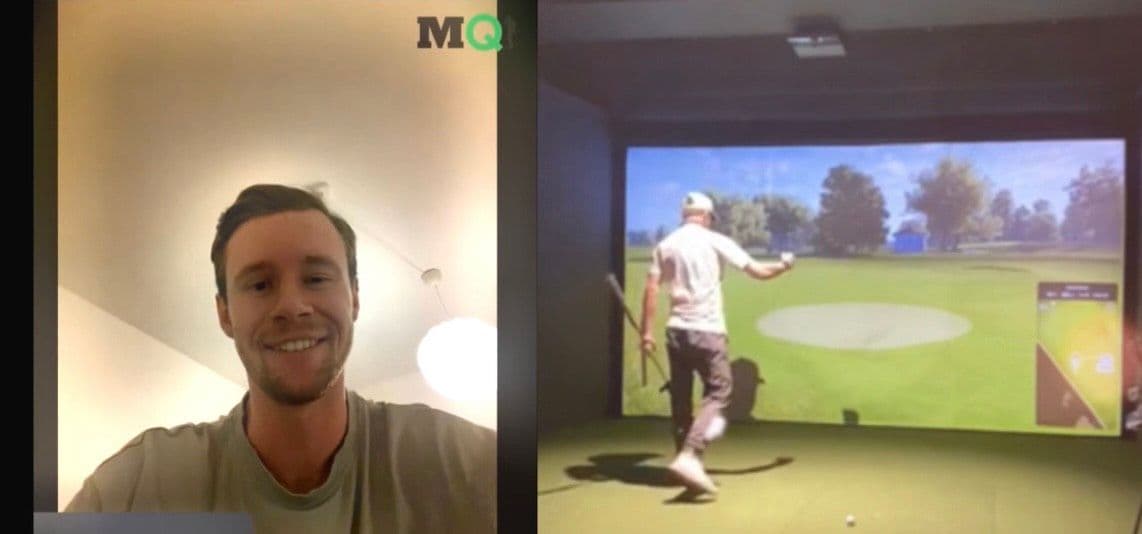
In the first World Series event, 18-year-old Danish amateur Mads Heller emerged from the most accomplished virtual golf field ever assembled. He shot 63-65 at Valhalla Golf Club to top the leaderboard by one—and did it with panache. His reactions were nearly as compelling as the shots themselves. While many pros have to overcome the simulator learning curve—like American Jordan Weber, who used to wake up at 4 a.m. every day to practice before work—to Heller and other young golfers, it's second nature. Some players just have it.
Coming off a T-3 finish at LPGA Q-Series, China’s Mohan Du—a previous NEXT Tour winner—shot 68-64 to finish eighth in the first World Series event. This week, the LPGA announced the formation of a Women’s TGL league at SoFi Stadium. If we’re picking captains, we might as well start with Du.
Tying Du at Valhalla was Kim Koivu, a winner on both the HotelPlanner Tour and the NEXT Tour. Koivu captured the first NEXT Tour qualifier this season and says he doesn’t need much practice time to contend. More power to him—that has not been my experience.
When I began practicing for the NEXT Tour last year, I was about a 3-handicap. My virtual short game was nonexistent. Judging how real shots would react on a two-dimensional screen robbed me of any feel. I often played ping-pong around the greens. Putting was easier than chipping but I rarely made anything. The NEXT Tour allows for an eight-foot gimmie circle. Back then that circle of friendship wasn’t nearly big enough.
In my first simulator event, I shot 3-over… with an ace. Does a hole-in-one count on a simulator? Those without one might rush to say yes, but I’ve come to think it lives in a category of its own.
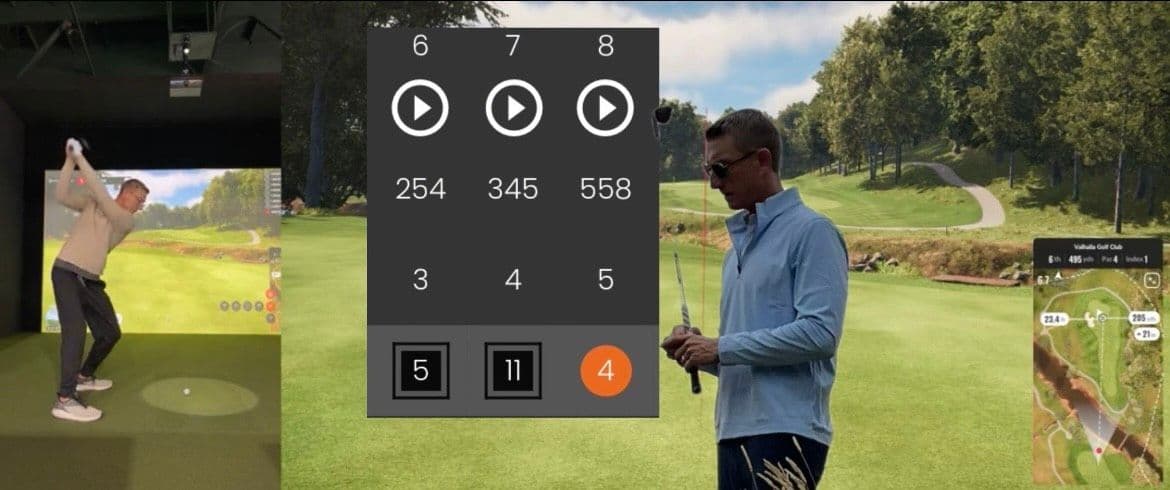
In the following event, I made an 11 on a par-4 on the way to a 77. Aside from that one disaster, it was a decent round. But a T-385 finish—15 shots behind the winner—wasn’t exactly encouraging.
I started spending more time in simulators at the local PGA Tour Superstore—$26 for 90 minutes is a steal. I also reached out to Jordan Weber, who won the very event where I made my 11 by shooting 10-under. The man who beat me by 15 in a single round advised me to hit higher, softer shots around the greens for more control, play aggressively, and worry less about imaginary tree branches.
The following event was played virtually at Muirfield Village. I eagled both front nine par-5s and with a few holes left, found myself just four back of the lead. For the first time, the nerves felt real. A par putt sat on the gimmie circle border when I encountered technical difficulties: The simulator froze and wouldn’t read the stroke. I must have hit the putt 20 times before giving up.
While a tech malfunction is not something you’d ever encounter on a real course, there are all manner of variables between shots—delays, weather, bad bounces, injuries, or even a negative interaction with a partner can alter a round. I restarted my closing holes on a new simulator, rattled, and closed with a pair of late bogeys for an even-par 72. Still, it was progress: T-92 out of 552 and my first check.
Last season began with 929 players. The top 100 on the money list automatically qualified for the World Series—no entry fees, $150K-$250K purses, and global fields. My goal was simple: qualify. At Bethpage Black in the final event, I was 3-under for the round and narrowly inside the number. A 10-foot par save on 17 and a bold shot from short-sided fescue on 18 helped me hang on to finish T-63 for the event and 94th on the money list. After four events I'd made the top 100 by $8. Mission accomplished.
The way you get better at virtual golf is the way you get better at anything else: practice. My swings, pitches and putts leading up to the 36-hole World Series event at Valhalla took place almost entirely indoors. With two competitive rounds to play, there’s less chance someone gets hot for an hour and beats the world.
After two 5-under practice rounds, I opened with a bogey. It would be the only time I was over par for the tournament. From 206 yards on the 530-yard par-5 second hole, a mid-iron covered the flag and settled inches outside the gimmie circle. The simulator didn’t freeze this time. I made the putt. Eagle.
The remaining 34 holes weren’t as sharp as practice, but all my work around the virtual greens paid off, keeping me competitive. I finished the tournament at 8-under in a tie for 43rd, eight behind the winner.
I don’t have the game to truly contend yet—but I’m getting there. Golf is hard no matter where you play it, and that’s what makes progress so satisfying. There will be more setbacks (I returned from a holiday break to shoot 6-over in a Pinehurst No. 2 in a practice round), but the game demands humility and hope in nearly equal measure.
Maybe this will be my week.