
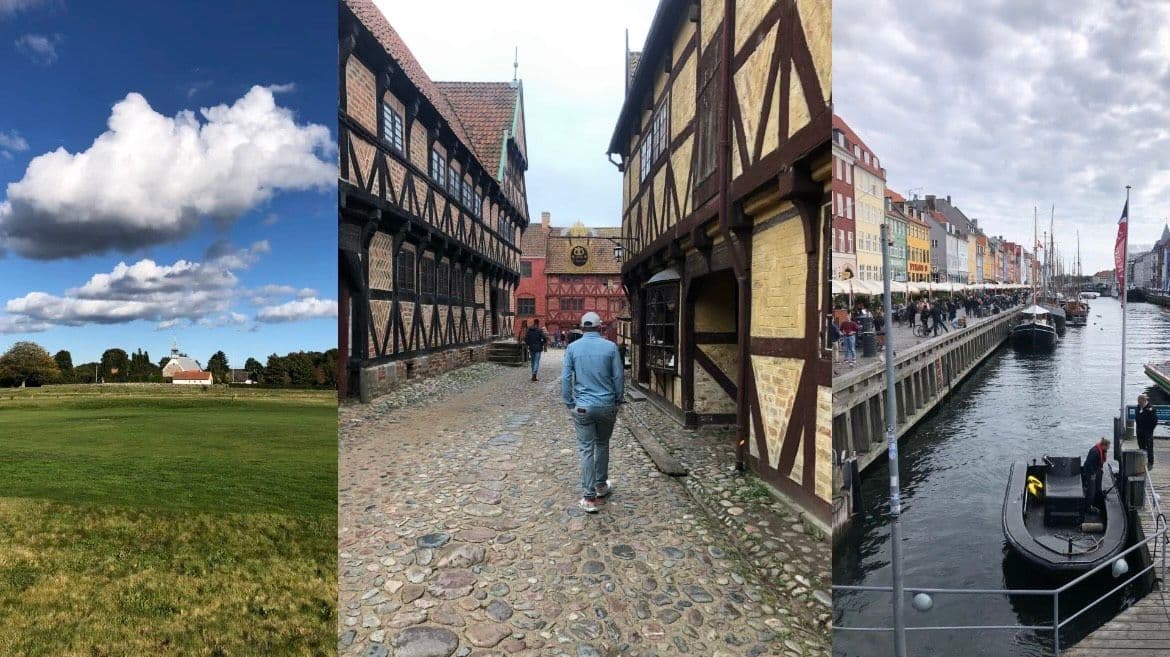

“I’d be shocked if this plane makes it to Europe,” said Keegan Rice as we took our seats.
Keegan – my best friend from high school – has slept on the plains of Africa and in the jungles of Southeast Asia. Want to know what it’s like to tube down the Vang Vieng River in Laos, or get chased by rhinos in Botswana? Keegan has those stories. He also has caddied for me at tournaments in Singapore, Thailand, Spain and The Bahamas. He has flown on rickety planes in countries with less than mediocre safety records, and here he was telling me this old plane would be lucky to make it to Greenland.
“Hey, man, is your ashtray full?” I said jokingly.
We were headed to Denmark for the first stage of DP World Tour in Q School. It was fall 2022 – a time when Denmark wasn’t a target of American bullying and threats. We had scheduled a long layover in Vienna so I could see where my Nana grew up. When Keegan heard DP World Tour Q School included a Scandinavian country, I didn’t even have to ask if he wanted to come caddie. He was in.
Despite a few bumps over the Atlantic, the flight touched down smoothly in Vienna, where a 12-hour layover – and lots of espresso – awaited. Austria was the childhood home of my sweet, loving Nana. She died years ago but she left behind a handwritten journal for her family. It includes her time living in Nazi-annexed Austria during World War II. It is a harrowing account of a lonely girl living in a dangerous time.
In the 1930s, Hitler pressured the Austrian government to unite with Germany, promising prosperity while expanding German power. The Austrian Chancellor tried to assert Austria’s independence and announced the Austrian people would vote on annexation, but was forced to resign. The following day, Hitler and German troops violated multiple treaties, rolled into Austria and set up a new government.
Nana lived under Nazi rule in Vienna as a girl. In her journal she recalls shameful levels of complicity among many Austrians – and the terror of Allied bombings that nearly killed her.
The sirens would howl to announce an imminent air attack and everybody would go into the cellar until the all-clear was sounded. During one of these bombardments some bombs had hit very close. The whole building shook, the walls vibrated and plaster fell on us from the ceiling. We were terrified. After the all-clear we all went upstairs and discovered right at the front door a bomb. Fortunately it was a dud and did not detonate. If it had, we would, all of us surely have perished.
When Keegan and I landed in Copenhagen late that night, my golf clubs didn’t arrive with us. I filed a missing bag report, but the airline rep said the whereabouts of the bag hadn’t even been determined. The taxi stand at Copenhagen airport was filled with Teslas and Mercedes electric vehicles. After a deep, hypnotic sleep, my clubs were still nowhere to be found.
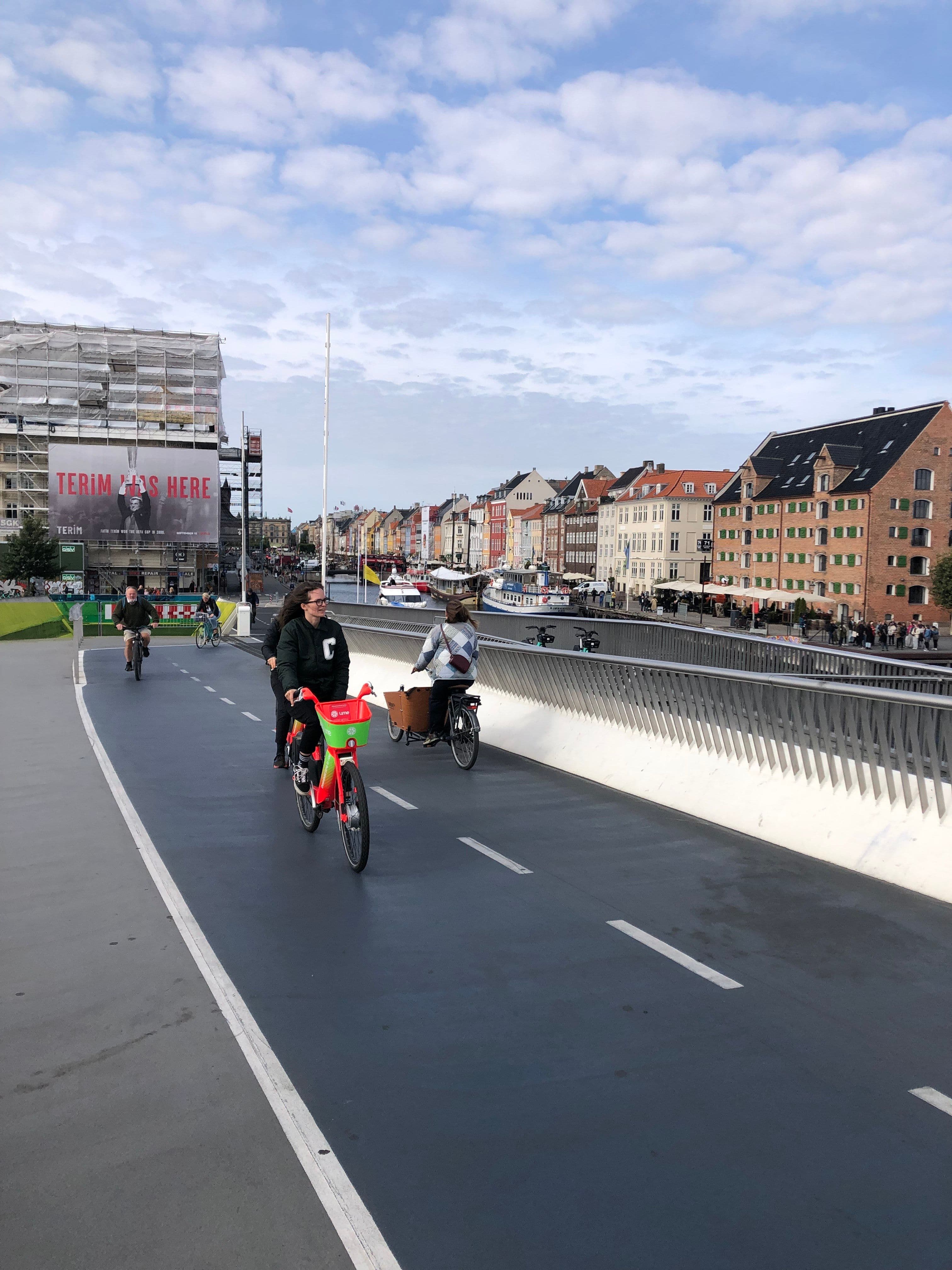
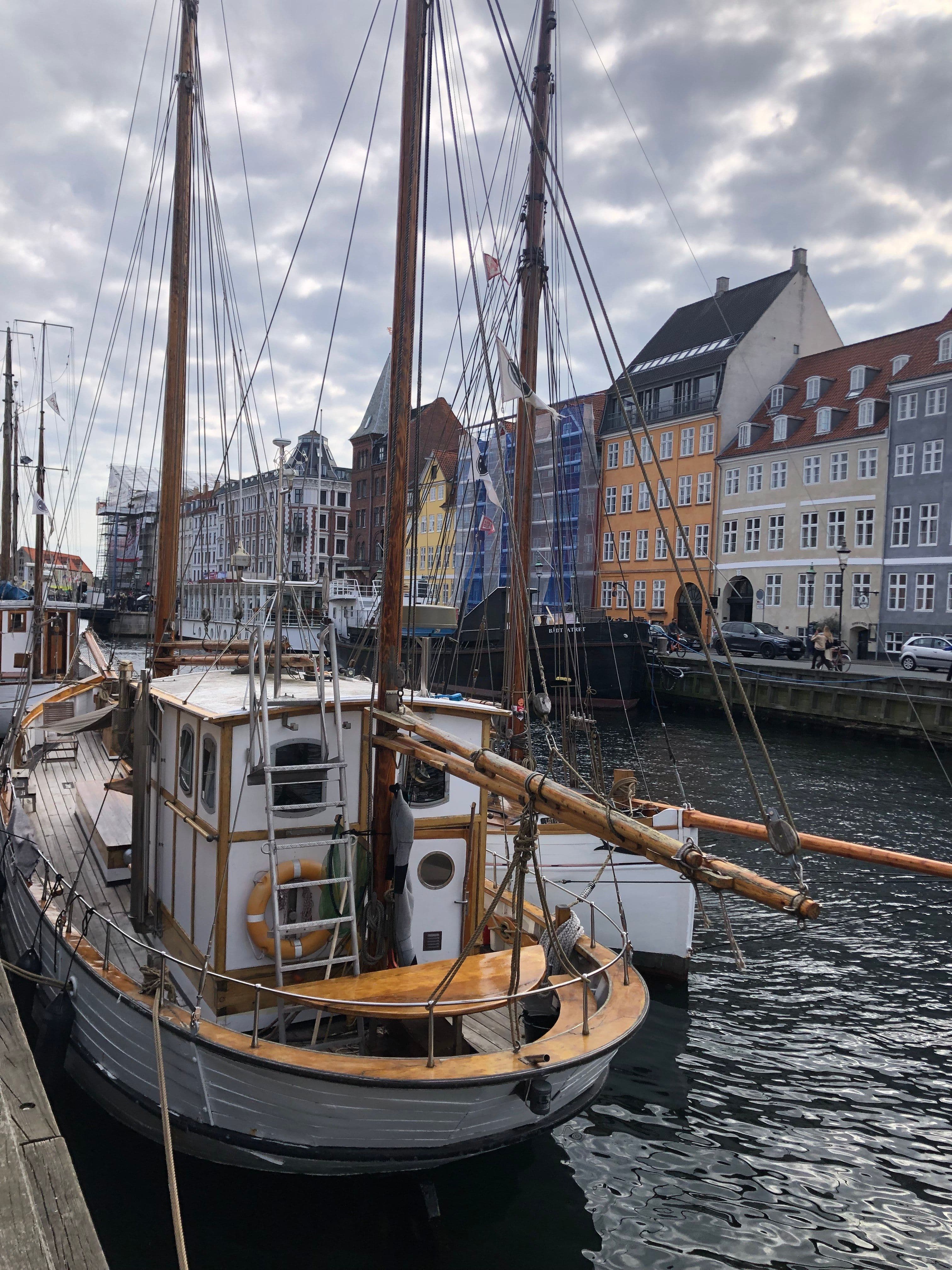
Copenhagen is home to about 600,000 people, and unmistakably, a large percentage of them get around on bikes. Electric vehicles quietly dominate the streets. No horns blaring at one another, no loud engines, just smooth orderliness. Keegan and I walked the bustling streets, strolling through the colorful heart of Copenhagen where cafes were full of life and the wine was flowing. A lively protest calling for action on climate change stopped us in our tracks. When we continued on, Keegan led us through an “anarchist stronghold.” Despite some uncomfortable sights, the area was surprisingly clean, quiet and safe.
Eventually, we made our way across several of the marvelous bridges that connect the country. Offshore wind turbines spun and water currents churned. A Twitter follower named Christian heard about my lost clubs and offered to loan me his for the week. Soon, we were at Christian’s apartment to see if the offer was too good to be true.
Christian appeared with a set of Srixon blades, a Scotty Cameron Circle T putter and TSi woods. He could have passed for Jude Law’s younger brother. He’s a new father around my age, and we hit it off. I asked him if I could leave him something with him for the clubs — money, a passport…a briefcase full of IOUs? He brushed off the offers and wished me luck.
“You can safely leave a baby outside a restaurant here so they don’t make a fuss in a crowd,” said Christian, illustrating the deep trust of Danish people. “This is actually a common practice.” (If you leave a baby unattended outside a restaurant where I’m from, I thought, you might end up in prison.) Christian allowed me to drive away with thousands of dollars of his golf equipment and expected nothing in return.
I spent the next two days practicing with Christian’s clubs at the tournament course. I met up with a young Danish pro in the Q School field, Søren Lind, who had tracked down utility irons, wedges and a putter for me to try. Here Søren was competing in his first Q School, yet rather than let one of his competitors flounder, he offered help.
“(Danish) people are what you expect out of them,” Søren says. “They’re very loyal and very friendly. It’s a small country. People feel very connected.”
Søren grew up in a small town in Denmark. Junior golf competition consisted of representing your golf club as part of its traveling team. He started playing on the junior team before advancing to the men’s team. Even now as a professional golfer, he competes for the team a few weeks a year.
“It matured me as a golfer and a person,” Søren said. “Now when I’m in the position where I’m a pro, I’m trying to pass on that legacy. We’re still trying to play with the juniors so they get the same feel. To let them know, you’re just as important as I am.”
The night before the first round, Keegan and I set out for the airport after being informed that my clubs had finally been found. While awaiting the arrival of the Scandinavian Airlines flight, we struck up a conversation with an airport employee. The airport is small, but it recently underwent a major renovation, and like most designs here, it is understated, sleek and beautiful. The employee told us the design concept is very Danish.
“We want everyone to feel as if they’re a VIP,” the employee said. “No one is better than anyone else here. There are no fancy lounges – the entire airport was designed to be a VIP lounge for everyone.” Eventually, my golf bag arrived. It was raining as we walked outside, and we felt like we were dancing between the raindrops.
The rain continued over the coming days, and a cold wind pierced like a Viking blade. Going off in the last tee time in the morning wave, I got battered by the elements. I struggled with distance control, and the putts weren’t falling. Keegan and I found ourselves on the wrong side of the tee-time draw and after battling in the worst of the weather, found ourselves on the wrong side of the Q School cut. Søren came over to our rental house after the tournament ended, and we dove deeply into growing up and playing golf in Denmark.
“The law of Jante is 10 rules that are very integrated into Danish society,” Søren said. “It’s set to make people behave in a very respectful way. Some of the rules are: You're not better than anyone, you’re not smarter than anyone, you shouldn't think that you’re higher than anyone.”
The laws teach humility and help foster a connected culture. Given that Denmark has produced some impressive pros – the Højgaard twins, Thorbjørn Olesen, Rasmus Neergaard-Petersen – I was curious about how the Law of Jante affected Søren’s golf development.
“Coming to America and coming back, these rules are very present in the way you behave and speak about yourself in Denmark today,” Søren said. “When I say I’m a professional golfer, I’m always a little hesitant. In Denmark, you have to be a little more humble. It’s good to have, but it’s also good to be proud of what you do.”
Danes have a word for quiet contentment and deep satisfaction. “Hygge is a Danish word that is described as a situation that’s very cozy,” Søren said. “For instance, when you play golf in rainy, windy conditions and you stand out on the golf course and you think to yourself I could just sit inside with a blanket, with a warm cup of tea…I want to hygge when I get home.”
Denmark is consistently ranked one of the happiest places in the world and you can understand why – people look out for each other. I asked Søren whether he believes Danish golfers are happier than golfers elsewhere.
“I think with golf, it’s so hard because no matter who you ask around the world, golf kicks your ass almost every time you play.”
We are at the mercy of forces beyond our control–on the golf course and in the world. Our beautiful, difficult game improves when we pay it forward, like Søren. When we take a chance and trust, like Christian. When we share our struggles, like my Nana. When we carry a friend’s dreams, like Keegan.
When the game kicks our ass, we should be so lucky to have friends in the world to lift us up.


Comments
...