
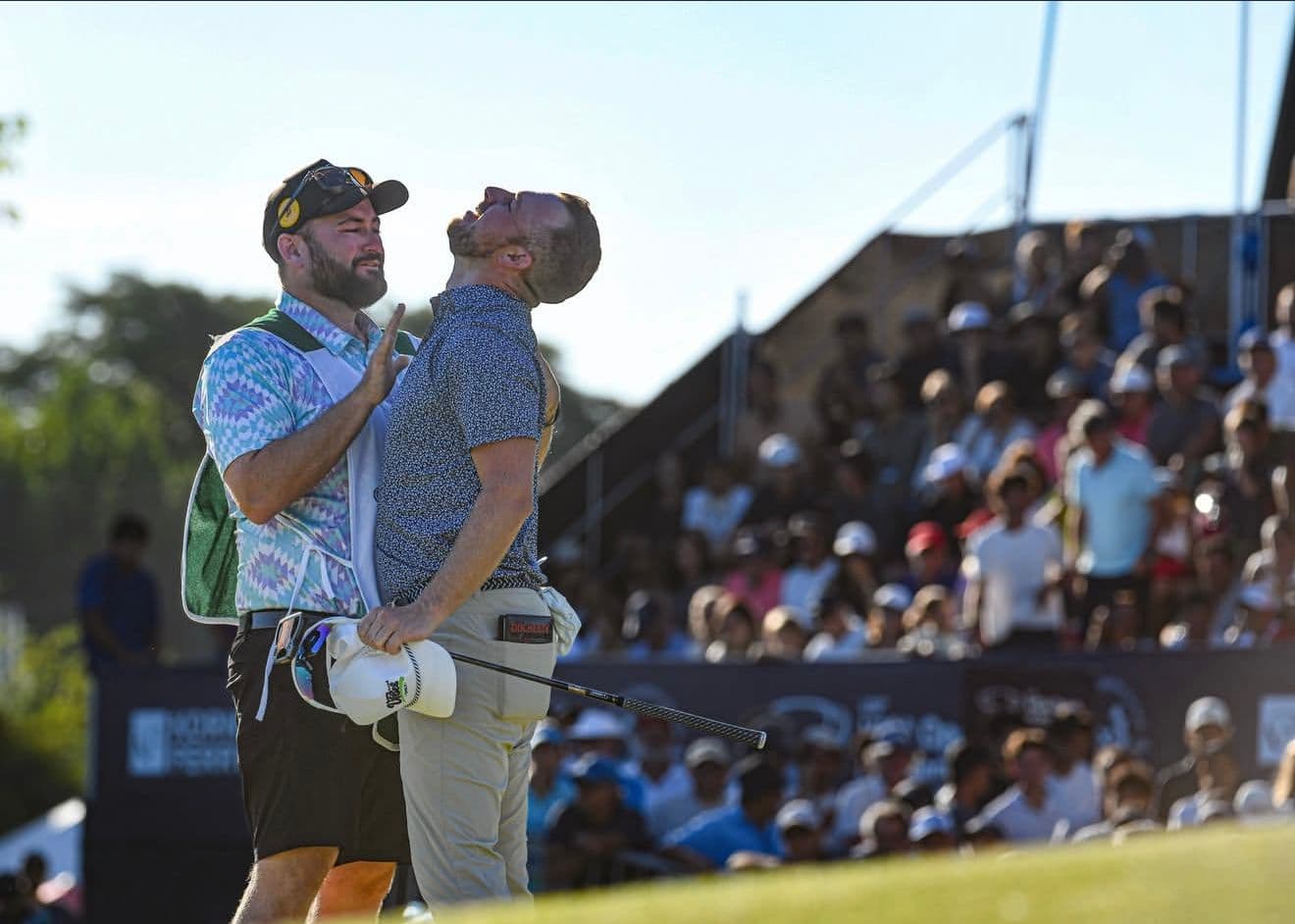

On Sunday, Alistair Docherty won for the first time on the Korn Ferry Tour, half a world away at the Argentina Open, earning a spot in the Open Championship at Royal Birkdale in the process. Combined with a runner-up finish earlier this season, he’s on track to secure one of 20 PGA Tour cards for 2027.
But this isn’t a story about what lies ahead for Docherty. It’s about what he went through to get here. It’s why the hearty fist pump he delivered in the immediate aftermath of his victory was about so much more than finally breaking through.
The missed cuts. The near-misses. Sleeping in his car. Looping at his home club to scrape together enough money to make another start. Spending Christmas in a seedy hotel room while sick with Covid. Surviving a bad car accident. Accumulating debt so massive that he can’t recall how many times he has been broke.
What transpired on Sunday didn’t erase those memories. It validated his quest.
In 2018, two years into his professional career, Docherty had maxed out his credit cards. He was $20,000 in debt and had no choice but to stop chasing his dream.
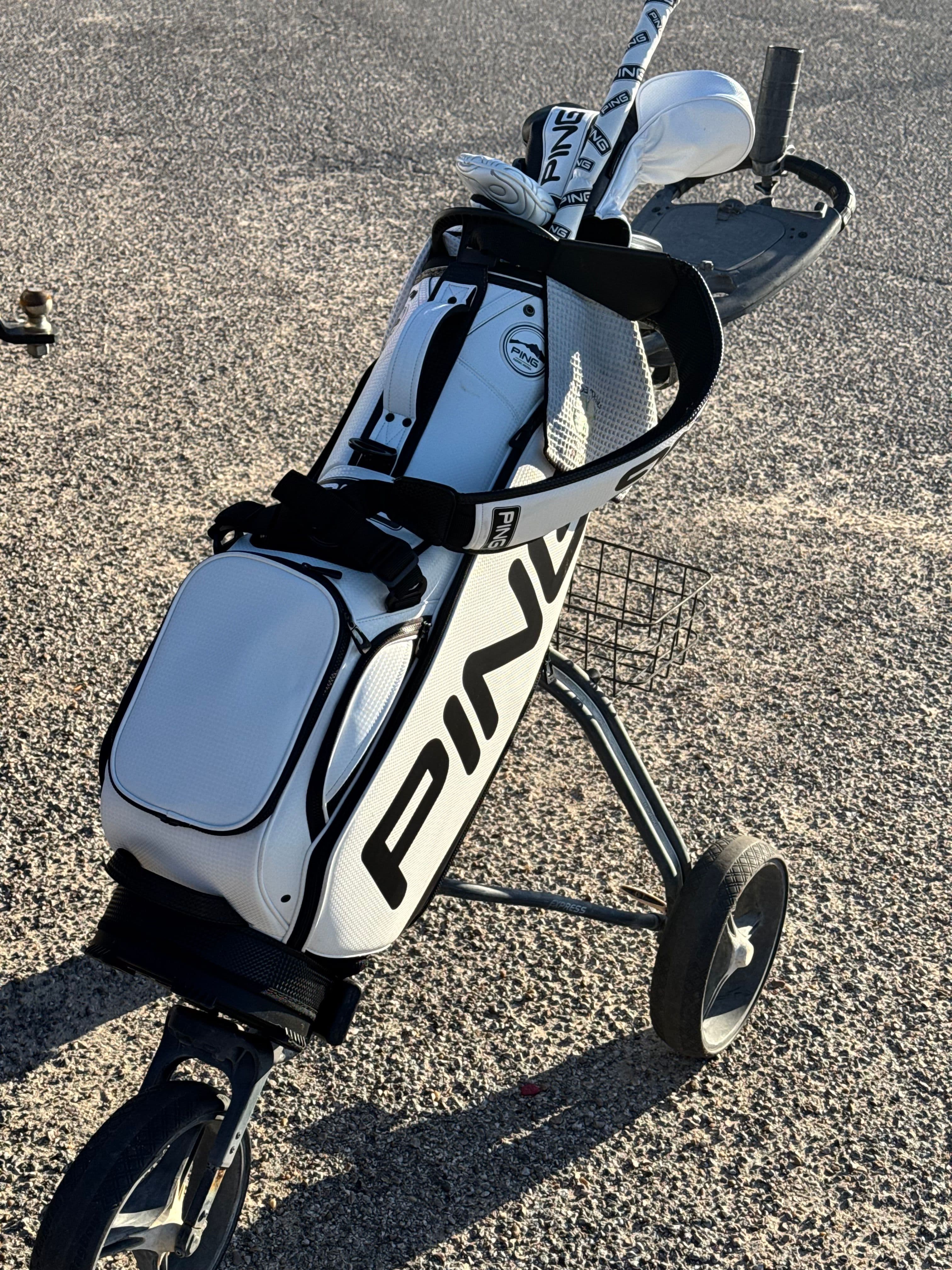
He took a job caddying at The Vintage Club in Indian Wells, Calif., working six and seven days a week and volunteering to go 36 holes in a day whenever the opportunity was there. If someone was looking for a loop, Docherty grabbed the bag.
When his body allowed him to practice, he headed to a muni down the road. For three months, the worn-out range balls were all he had — no TrackMan, no swing coach, no tour-level prep. Just enough swings to keep the dream from dying while he saved money and chipped away at the debt.
Eventually, he scraped together enough cash to enter a few events.
The 2019 Reno Open on the Asher Tour was just his third start back. The $6,000 winner’s check mattered — he still had bills to pay, after all — but the real carrot was bigger: The winner would earn an exemption into the Barracuda Championship on the PGA Tour.
In the second round of the three-day, modified Stableford event, Docherty racked up 22 points and vaulted into the lead. A bogey on his 54th and final hole dropped him into a playoff with mini-tour legend Matt Picanso.
One hole later, Docherty made birdie.
He had a paycheck. And a chance.
Later that summer at the Barracuda, the former Chico State standout made the cut. But a final-round 6-under point total — disastrous in Stableford scoring — dropped him to 66th.
The $7,000 paycheck wasn’t life-changing money, but it was enough to cover the entry fee for Q school. Docherty advanced through the first two stages, and although conditional Korn Ferry Tour status was secured, that wasn’t the goal. The goal was guaranteed starts. That pursuit ended after a third-round 73. He finished T-61, just a few shots outside the number needed to lock up real opportunities.
While conditional status sounds like security, it isn’t.
Pro golf is expensive at every level, but having conditional status on the Korn Ferry Tour might be the most expensive of all. Players chase Monday qualifiers, knowing one good week — qualify, make the cut — can unlock multiple additional starts.
But each Monday costs money, about $1,500 per attempt when you factor in flights, accommodations, meals, rental cars and entry fees, among other things. Miss a few Mondays in a row and the credit card balance starts climbing again.
After Covid shut down the world, Docherty was back to chasing Monday qualifiers and watching his bank account dwindle again. On the drive to one of those qualifiers, he and I were texting. At one point, he mentioned he was nearly out of money again and planning to sleep in his car the night before the Monday Q.
I couldn’t let that happen, so I sent out a tweet explaining the situation. And strangers jumped into help, donating enough to cover the hotel and other expenses for the week. Docherty and his mother, Andrea, were beyond appreciative.
That Monday, Docherty shot 65 and qualified for the event. It felt like a scene from a movie. But every movie doesn’t have a Hollywood ending.
A double bogey on the 14th hole of his second round was costly, devastating in fact. Docherty missed the cut by one.
The rest of his year followed a familiar pattern: more Mondays, a handful of starts, and just one made cut. By the end of the season, the money had dried up again. He had been crashing at a friend’s condo, but even that stay was short-lived. The condo flooded, and Docherty went back to couch surfing. First it was a few weeks in his coach’s guest room. Then he maxed out every last dollar on a credit card so he could play another event.
Soon he was back to sleeping on another friend’s couch, only to be diagnosed with Covid.
It was almost Christmas in 2020. Plans to return home to Oregon and see his family were scrapped. Instead, he crammed everything he owned into his car and checked into a rundown hotel in the Phoenix area.
Yet things still hadn’t reached rock bottom.
One morning he woke up to find his car had been broken into. Nothing of much value was taken — his clubs were in the hotel room with him — but the smashed windows left him with a repair bill he couldn’t afford.
Despite still having Korn Ferry Tour status — it carried into 2021 because of the Covid adjustments — Docherty had no choice. He went back to work.
Once again, he picked up a caddie bib, this time at Silverleaf, an ultra-exclusive private club in Scottsdale. The money was good, but Docherty would have much rather been playing the course than looping it. He worked as often as he could.
Then someone stepped in to help. A follower who had first heard about Docherty when he was preparing to sleep in his car had stayed in touch. Now he wanted to give him another lifeline, so he wrote Docherty a $15,000 check.
The money allowed him to chase a few more Korn Ferry Monday qualifiers and play the Dakotas Tour, a well-known mini-tour circuit. There were flashes of success, enough to get him back to Q school.
With status on the line at the critical second stage, Docherty fired a final-round 68, but it wasn’t enough. He missed advancing to final stage by two shots.
For many players, that would have been the end. Docherty went back to Silverleaf, determined to regain his status. That’s where he got another unexpected break.
A match with Riggs from Barstool Sports — set up with the help of a fellow caddie — got Docherty in front of a large audience and helped point his career back in the right direction.
With financial help from a Silverleaf member, Docherty entered a few more Korn Ferry Tour Monday qualifiers and got through one in Wichita, Kansas. He made the most of it. He finished T-23 after a final-round 66, which earned him a spot in the following week’s field because of the top-25 finish.
Barstool sent him apparel to wear that week and began promoting him on social media, bringing a slew of attention to a player who had spent years grinding largely out of sight.
That fall, Docherty breezed through the first stage of Q school, slipped through second stage by a shot and then played solidly at final stage, locking up guaranteed starts on the Korn Ferry Tour for the first time in his career.
Soon after, he signed a contract with Barstool. For the first time in a long time, things were looking up.
Docherty finished 86th in Korn Ferry Tour points during a solid 2023 season, retaining conditional status for what would become a breakout 2024 campaign. After making a cut early in the season, things started to click. That summer he posted back-to-back fourth-place finishes and suddenly a PGA Tour card — awarded to the top 30 in points at season’s end — was within reach.
He arrived at the Korn Ferry Tour Championship playing well and firmly in the mix. Docherty needed no worse than a two-way tie for second to secure his card. A final-round 68 put him right there. Everything came down to two putts.
Doc Redman had seven feet on the final hole to tie Docherty. He made it, producing a two-way tie. Moments later, Brian Campbell stood over a similar putt. He needed it to tie as well. Dead center. Three-way tie.
During a season in which Docherty struck 5,101 shots, had he taken just one less in one of the events he made a cut, he would have earned his PGA Tour card. But that wasn’t the end of the heartbreak in 2024.
Riding the momentum of his season, Docherty headed to final stage of Q school hoping to grab one of the five available PGA Tour cards. Entering the final round, he was in position. But a closing 73 left him a shot short.
After a winter spent thinking about what might have been, Docherty opened his 2025 Korn Ferry season exactly how many expected. He made six of his first eight cuts, posted two top 10s and didn’t finish lower than 26th. A PGA Tour card felt inevitable.
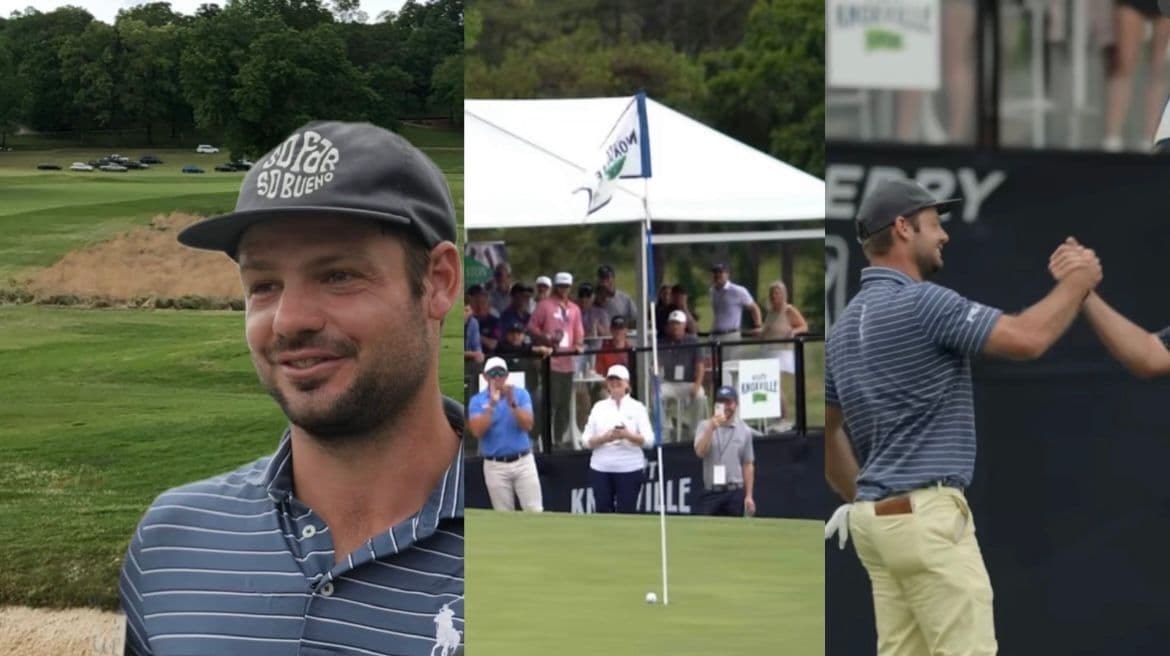
Then June happened. Leaving a practice round in Knoxville, Tennessee, Docherty was T-boned at high speed. He spent hours in the hospital, but doctors found no major injuries. They told him again and again: You’re lucky to be alive.
The crash took a toll.
“He wasn’t himself,” Andrea told me.
A few weeks later, Docherty qualified for the U.S. Open, but he never fully regained his form. He fell down leaderboards as well as the Korn Ferry Tour points list. He stopped the slide with a T-3 in the second-to-last event and secured full status for the 2026 season by virtue of his 50th-place finish in the points race.
Still, it felt like another season had slipped away. Another lost opportunity.
Things didn’t start much better in 2026.
I was at the first event of the season in The Bahamas, and during the third round I noticed Docherty at the far end of the range, away from the other players.
I knew he had been struggling. He was dead last in the field after an opening 78. Even after posting a second-round 69, he missed the cut by 11.
As I walked over to say hello, he hit a drive. Then he bent down, grabbed a ball and fired it onto the range in frustration. I stopped, figuring it probably wasn’t the best time to say hello.
When I saw him the following week after he had made the cut, I told him about the range incident. He laughed.
A final-round 66 gave him much-needed confidence — and a runner-up finish.
Then came Argentina.
Back in Oregon, Andrea was doing what she often does on Sundays: folding laundry and watching golf. Only this time, she was watching her son. On YouTube, anyway. And the broadcast was in Spanish. But she didn’t need to understand the commentary.
“I stopped folding clothes and just paced,” Andrea said.
Tied as he stepped to the tee on the 354-yard closing par-4, Docherty launched a perfect drive that chased onto the green, leaving two putts for his first Korn Ferry Tour win and a spot in the Open Championship.
The first putt agonizingly rolled three feet past. But the second putt was dead center.
In Oregon, Andrea screamed and broke into tears. In Arizona, Docherty’s girlfriend, Celia Palmero, did the same. On the green, Docherty closed his eyes, pumped his fist and let out a scream.
Most people watching merely saw a golfer celebrating a win. What they didn’t see were the years of anguish and heartbreak a 31-year-old golfer endured to get there.
Alistair Docherty was the Argentina Open champion.
That fist pump said it all.


Comments
...