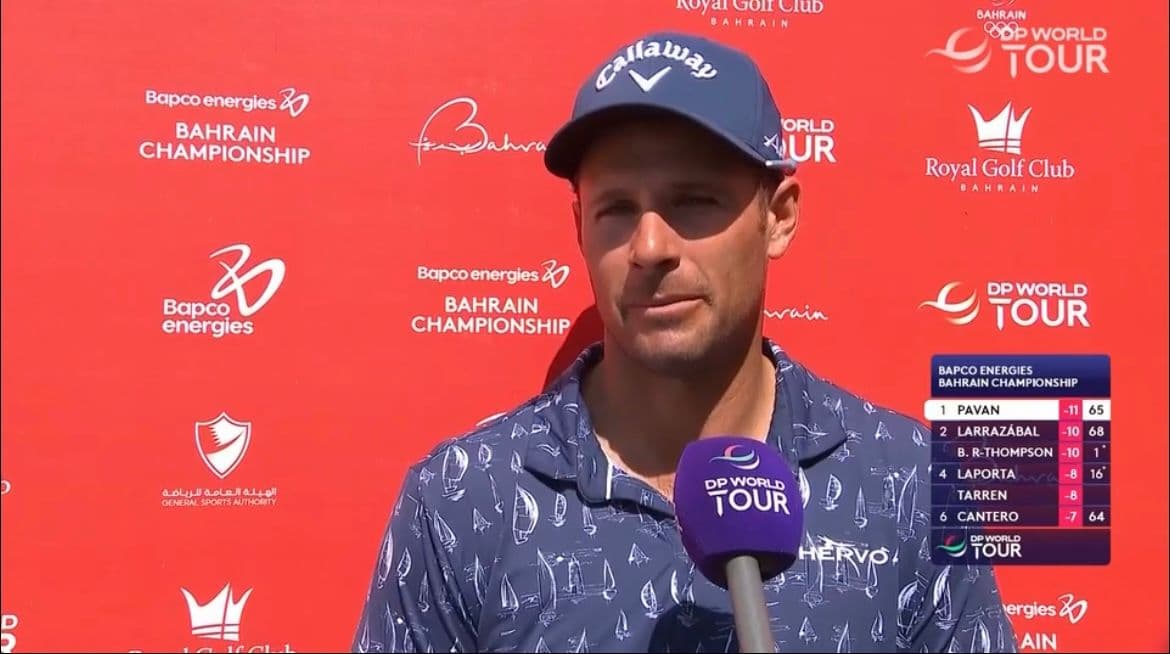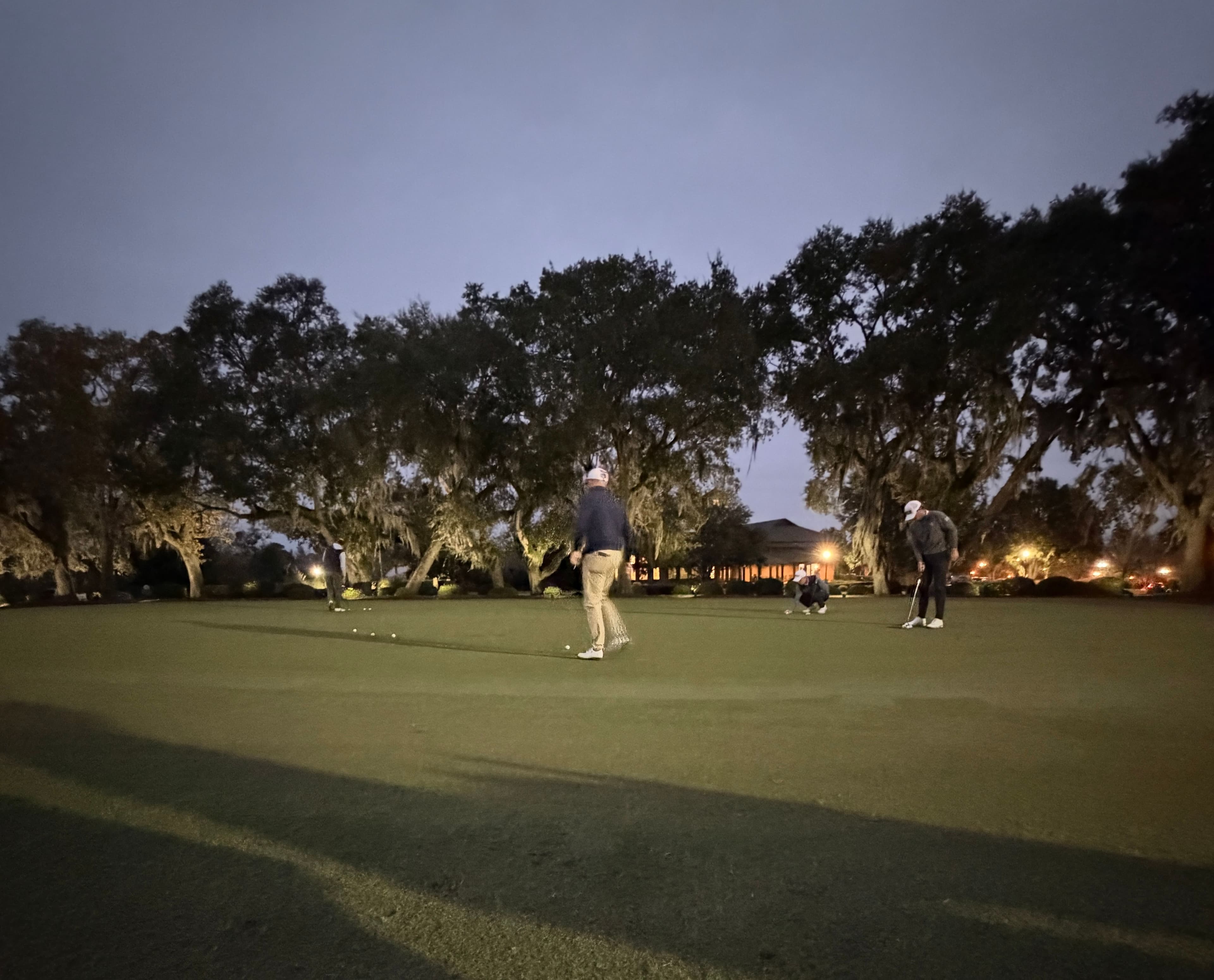

Jonathan Brightwell had just a few holes left in the final round of the second stage at Q-school in Valdosta. He had started the day three shots outside the number, but now he was six-under on the round, eight-under total, and cruising well inside the line that would send him to Final Stage.
This wasn’t just another good round. This was a lifeline. The 27-year-old had already decided this would likely be his last run at Q-school. He and his wife wanted to buy a house, start a family, build a life that didn’t involve chasing Mondays and mini-tours. If this didn’t work, he was ready to walk away.
And then the rain returned. The horn blew. Again.
During the delay, the rumors started: the final round might be wiped out. Scores could revert back to yesterday. An hour later, the nightmare became reality. The round was cancelled, the scores rolled back, and Brightwell went from safely advancing…to out.
Just like that, a career he had fought years to keep alive might have ended in the dining room of Kinderlou Forest Country Club, the host of the second stage site — not on a golf course.
Talk to any professional golfer who has survived Q-school and almost all of them will tell you the same thing: Second Stage is the real pressure cooker. Get through it and you’re guaranteed status, no matter what happens at the final stage. Miss it and you’re staring at another year on the mini-tours — or wondering if you’ve reached the end of the line entirely.
Which is exactly why the rule allowing the tournament to be cut to 54 holes should have never existed in the first place. And why, after what happened in Valdosta, it absolutely has to change.
When I spoke to Brightwell on his drive home from Georgia, the first thing he made clear was this: the staff on site — the Georgia PGA section and the rules officials — were terrific. They followed the rulebook exactly as written. Every player I talked to echoed the same thing.
KFT member James Nicholas — who, like Brightwell, had played himself inside the number before everything reverted — said the same about the PGA Tour officials he spoke with off-site. Nicholas even noted publicly that the Tour was sympathetic and open to discussing a change to the rule going forward.
But for Brightwell, Cole Anderson, Gunnar Broin, and Nicholas, that offers little comfort. They didn’t just miss out on advancing. They missed out on a chance at a PGA Tour card this week in Florida — a chance that may never come again.
The policy that cost them is the same weather-delay rule used during the Korn Ferry Tour’s regular season. It states that play cannot be carried over to the next day unless at least half the field has finished the round, and that players can’t be sent back out unless the final group has the opportunity to complete play. If either condition can’t be met, the round is wiped out entirely and scores revert to the previous day.
After the tournament was cancelled and the scores reverted back to round three, the storm that caused the delay blew through. But because the PGA section knew the leaders wouldn’t be able to finish, they couldn’t send players back out — the policy ties their hands the moment that information is known.
In his latest post on IG, Nicholas estimated that if play had resumed, only two or three groups wouldn’t have been able to finish. The final round of Second Stage — one of the most pressure-filled rounds of a player’s career — was wiped out because six players wouldn’t have had enough daylight to complete their round.
Six players.
During a normal Korn Ferry season, this rule makes perfect sense. You’re dealing with 65 or more players who have made the cut, all of whom would face last-minute changes to flights, hotels, rental cars, and weekly schedules. Caddies, officials, and staff have to move to the next stop — often across the country — in just four days. Protecting those logistics is reasonable.
But Q-school is the opposite. This isn’t about rising or falling a couple spots on a money list — it’s about an entire season. For a player with no status, Second Stage is the tournament. Everything hinges on these four rounds. Careers stall or advance here, not in June on a random Korn Ferry stop.
And unlike a regular KFT event, the logistics are simple. The officials at Second Stage come from local PGA sections; they can stay another day or two without blowing up a 25-event travel schedule. Only one or two Tour staff members are on site, and while Final Stage begins this week, there’s already a separate team handling setup and operations there. In other words, extending play wasn’t just possible — it was easy.
Which is exactly the point. Second Stage couldn’t be more different from a normal Korn Ferry event, yet it’s governed by the exact same weather-delay policy. And applying that policy here — in a setting where livelihoods are on the line — reveals the blind spot the Tour still has for the players fighting to reach the PGA Tour.
Weather delays are common, and the policies that govern them are well understood. The LPGA and DP World Tour both have separate weather-delay rules specifically for Q-school. This isn’t some surprise scenario that blindsided the Tour. They know exactly what Q-school means, they knew the forecast days in advance, and they still chose not to adjust.
As I was finishing this article, Jonathan Brightwell sent me a text that summed up everything he’d been wrestling with. He wanted to make clear that he has tremendous respect for the PGA Tour — playing there has always been his dream. But, he added, “This is why this situation hurts so much.” He added he was comfortable with this being his last Q-school, but with how it ended, he isn't sure what is next.
Then came the part that lands hardest: “It affects our families, our futures, and the lives we are trying to build.” He hopes the Tour will change the policy to protect the integrity of the competition — and to protect the players whose careers depend on it.
Brightwell and others will meet with the PGA Tour about the policy change, but the outcome he needed won’t be in that room. That window closed the moment the horn blew and the scores were erased. If the rules are updated now, they’ll come in time to protect the next player — not the one who played his way in and watched his season disappear on a technicality.
For Jonathan Brightwell, change may finally be coming — but it may be arriving only after his career has already slipped away.