

I left last week angry.
Not at the golf — the golf was incredible. The talent on the LPGA is absurdly good. I walked away more impressed than ever with the players themselves.
I was angry because almost nobody was paying attention, and I’m not even sure who deserves the blame anymore. The Tour? Sponsors? Players? Media? Maybe all of them. Everyone seems terrified of vulnerability, terrified of saying the wrong thing, terrified of losing control of the message. And in trying so hard to be safe, the entire product can end up feeling impossible to connect to emotionally.
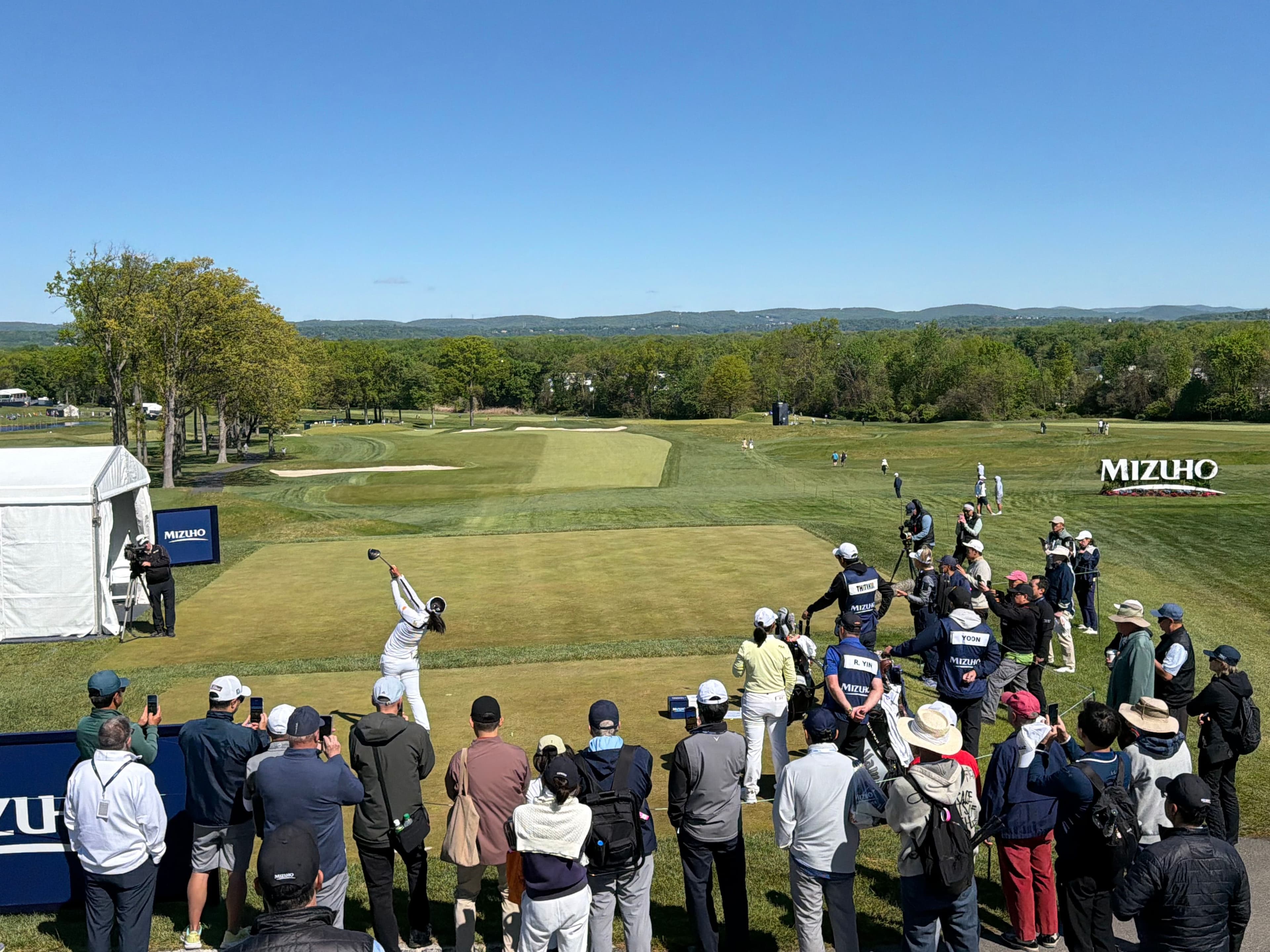
Last Wednesday I played in the pro-am at Mountain Ridge Country Club, the Donald Ross course hosting this year’s Mizuho Americas Open. During the round I watched well-struck short irons bound over greens and putts from above the hole race hopelessly past. It was classic Ross: miss in the wrong spot and face the wrath of severely sloped greens.
The greens were running nearly 13 on the Stimpmeter, and around the greens the course felt closer to a U.S. Open setup than a regular tour stop.
I walked off the course thinking nobody would break par.
I was wrong. Really wrong.
Jeeno Thitikul won at 12-under, a number I honestly didn’t think was possible, and 24 players finished under par.
I’ve always appreciated how talented LPGA players are, but this week raised that appreciation to another level. I honestly wish more people could play that course the way I did on Wednesday, because it’s almost impossible to understand just how good these players are until you experience how difficult it actually was.
But talent alone doesn’t make people care. Connection does. And right now, too often, the LPGA world seems reluctant to offer that connection.
A week before the Mizuho Americas Open I tried to line up multiple podcast interviews with top LPGA players. One by one, they — or their agents — declined.
One agent said their player “wanted to focus on golf right now,” despite not even playing that week. Another declined almost immediately. One asked for a list of questions beforehand, something I’ve never once been asked, and since I don’t prepare questions in advance, impossible to send. Other messages were read and never answered.
Individually, none of these are a big deal. Players don’t owe me interviews. But collectively, it speaks to something larger: too often in women’s golf, everyone seems conditioned to avoid risk. To avoid controversy. To avoid anything that might feel messy or uncontrolled.
On Wednesday, the Epson Tour posted a YouTube video featuring four players in a casual match. Among them were Daniela Iacobelli and Sarah White, both of whom are genuinely entertaining on camera.
The video had personality, some (bleeped out) swearing, playful joking and authenticity; these were not carefully managed athletes trying to say the right thing.
I was honestly excited to hear the tour had posted it.
The next day it was gone. Of course it was.
On Monday evening I watched the playoff for the final qualifying spot into the Mizuho Americas Open finish up. Two players battled for the last spot in the field.
One of them had made double bogey late in regulation to fall back into the playoff, then appeared headed for another crushing loss after making bogey on the first extra hole. As I followed her toward the clubhouse, I saw her rubbing her eyes. Tears understandably started to flow.
This was the side of professional golf people rarely see. The raw part. The human part. The part that actually makes people care.
I asked if she would do a quick on-camera interview. She understandably declined.
And to be clear, my frustration wasn’t with her. I’ve seen men decline interviews in similar moments too. But I also knew that interview would’ve been viewed by thousands of people, and more importantly, it would’ve made people feel something.
That’s what I think women’s golf desperately needs more of: emotional access. Vulnerability. Personality. Something beyond perfectly polished answers and carefully managed messaging.
And it starts at the top. Last week Nelly Korda appeared on the The Pat McAfee Show. Earlier this year she did the Sports Illustrated Swimsuit issue and attended the Met Gala. She has clearly made an effort to help promote both herself and the LPGA, and it should be applauded. Now more people need to follow that lead.
And this isn’t a one-way street. I don’t attend enough LPGA events to have built the kind of trust that leads to moments like that becoming conversations instead of refusals. That matters too. Relationships matter. Trust matters. Which is why I don’t think there’s one villain here. I think it’s a culture that has slowly taught everyone involved to play it safe.
I’ve hesitated to write this story, knowing some people would find issues with it, or discount the LPGA Tour, something that happens every post. But not writing it would have been part of the problem.
Last year at this same event, a group of media members, a former player, and a caddie stood around discussing this exact topic for nearly two hours. The reality is, it’s complicated. How women’s golf got here — and who is responsible for fixing it — is far from simple.
My argument that day was that women’s golf deserves to be covered like the major professional sport it is. But with that comes both the good and the bad. And it’s the “bad” (uncontrolled and uncomfortable) that seems to scare everyone.
There’s societal pressure, something that becomes obvious anytime an LPGA player speaks openly on almost any topic. There’s pressure from tours, agents, and sponsors not to create waves. And there’s also a lack of investment from much of the media — myself included — which means the trust and relationships needed to tell deeper stories often haven’t been built in the first place.
Craig Kessler, the new LPGA commissioner, already seems to understand some of this. The season-opening episode of Drive On centered around Lindy Duncan, and it worked because Duncan was honest and vulnerable. It gave people someone to connect with, someone to root for.
And it’s okay to have someone to root against, too.
Hall of Fame bowler Pete Weber once famously said, “Love me or hate me, you watched.” He was right. Weber created emotion. You tuned in hoping he’d win or hoping he’d melt down trying. Either way, you watched.
We all watched Bryson DeChambeau try to drive it over the water on number six at Bay Hill. Some people were rooting for him to pull it off. Others desperately wanted to see the ball splash. But everyone felt something.
That’s the part women’s golf still seems uncomfortable embracing. The LPGA needs to be okay with emotion, conflict, personality, and yes, even villains.
Because last week at Mountain Ridge Country Club I saw world-class talent. On the first hole I watched Hannah Green hit an approach that barely trickled over the green, basically a death sentence on a Donald Ross course with greens that fast.
Short-sided in thick rough to a green running hard away from her, Green somehow landed the chip perfectly on the back edge. The ball released down the slope and stopped four feet from the hole. She made the putt for par.
There are almost no words to describe how good that shot was. Video doesn’t do it justice either. It was the kind of shot only the tiniest percentage of golfers on earth — male or female — could pull off.
That’s why all of this is so frustrating. The talent is there. The stories are there. The emotion is there. Women’s golf doesn’t need people to pretend it’s great. The talent already proves that.
The hardest part isn’t convincing people the LPGA has a great product. The hardest part might be convincing everyone involved to stop being afraid to let people fully see it.
Comments
...