
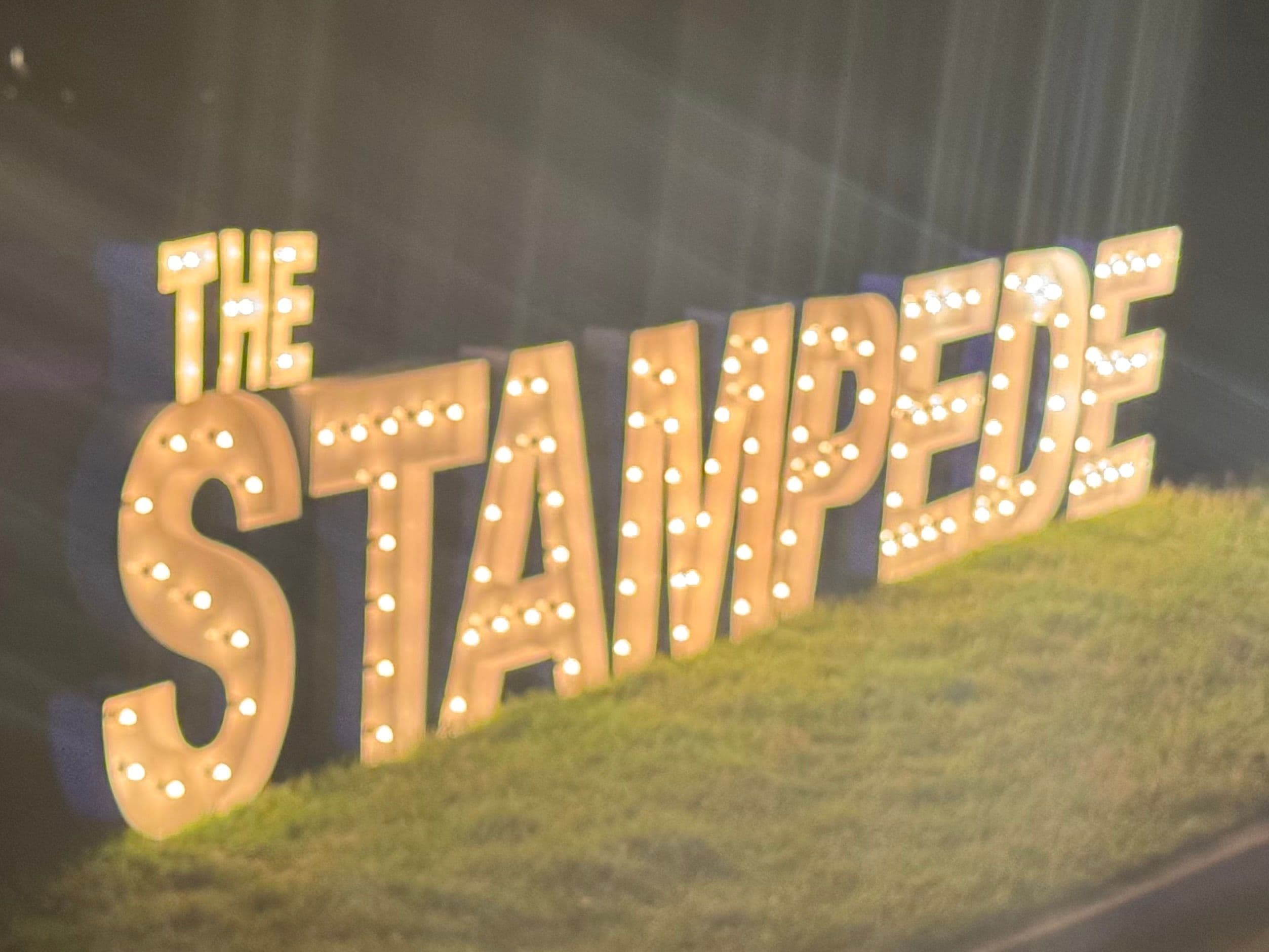
We’ve done it so many times I’ve lost track, meticulously packing the back of the SUV for the nine-hour trek, making sure nothing has been left behind before snapping a picture and posting a few words on social media: First rule when packing for The Stampede. Always leave room for the crystal! The post is made in jest, but why can’t a guy dream a little?
The Stampede is the rollicking member-guest at the Club at Old Hawthorne in Columbia, Mo. And for a guy who plays a good amount of golf and in a fair number of tournaments, I can say without question it is the best event I’ve played in. I said as much in a piece I wrote for golf.com in 2017.
At that point, I had played in seven consecutive Stampedes, keeping the streak alive two years earlier while navigating a move from the Northeast back to my hometown of Dallas. “We aren’t going to the Stampede this year, are we?” my wife, Leigh, asked in mid-May, fully aware the moving van would be pulling into the driveway a few days after the tournament. “Of course, we are,” I replied. And so we did. My gracious host is Pat Neylon, my running mate of the past 51 years, two guys who happened to wander into the same fraternity house on the Mizzou campus in August 1975 looking for a place to live. We forged a fast friendship that has endured. I’ve missed a couple of Stampedes since, but only because of the Covid shutdown and family commitments.
Due to the logistics required to get 144 players through 45 holes of match play, the event has since expanded to four days. Leigh and I pulled into the Neylon driveway on Tuesday afternoon, on the eve of the practice round. We broke bread that night on the patio at one of our go-to spots, Flat Branch Brewery, with Neys and his wonderful wife, Karen, a four-time senior women’s club champion, including the last three. They are godparents to our son. This visit marked the third time we had seen each other since March. I thanked Neys for the invitation and told them both how much I always look forward to The Stampede. The four of us raised a pint.
The dozen six-team flights, all named after thoroughbred legends, had been revealed in an email about 10 days earlier. There was some symmetry when I saw our names in the Citation flight. Neys and I had been assigned the same handicap (9.1) and were playing the same tees (silver). We were listed at the top of the flight. I told myself this was all a good omen and noted to Neys in a text: “Already in first place.” But who was I kidding? We hadn’t won our flight in more than a decade, and although we finished in the money a few times, we hadn’t come close to sniffing a win. Plus, we weren’t getting any younger, both pushing 70 and facing the prospect of playing a bunch of young bucks, a couple of scratch golfers among them. Finally, you pick your tees for the event, and handicaps are adjusted accordingly. We were flighted higher than we’d ever been.
Year in and year out, The Stampede, now under the direction of head golf professional Max Frericks, continues to add a few miles per hour to its fastball. When we checked in before our practice round, Neys and I were presented with a folder packed with information: a schedule of events, our match schedule, marked scorecards for the five matches, a rules sheet, pin positions, a course superintendent report, you name it. Subsequent texts included links to live scoring on the Golf Genius app. As has become custom, we played the practice round with two-time Stampede champions Vance Allison and Ed Cox. The golf was bad. Really bad. For Neys and me, anyway. We both played bogey golf on the front, and in the end, we lost all three ways in a $3 Nassau. The good news was that Neys played better on the back, capping his round by rattling in a 20-foot birdie putt at the last. The putter has always been my bugaboo, but I walked away feeling pretty good about the new grip I had implemented during a hastily scheduled lesson the previous Friday. It’s no secret that putting is pivotal in these events. We needed to give ourselves more chances … and then see some putts drop.
We started our first match on Thursday morning at the par-3 seventh hole. Neys rolled in an 8-foot par putt for the win, and like that we had a lead. (This was newsworthy, because in 2025 we didn’t have a lead until our fifth and final match.) We then proceeded to win the next five holes, a feat so eye-opening that when Vance checked the live scoring and saw we had a 6-up lead, he assumed it had to be a scoring error. The win at the next came on my conceded birdie, and two holes later, Neys holed a 10-footer for birdie. By my count, we had a pair of birdie looks on five of the nine holes. We coasted to a 7-3 win.
Neys has quite the golf story. While I’ve been playing for 60 years, he didn’t take up the game until his mid-20s. During our first round together, he slapped it around for 17 holes, and only after topping his tee shot at the last, did he turn and ask, “What am I doing wrong?” We have played countless rounds together on courses from Nevada to New England. He has developed into a solid single-digit handicapper with a short game to die for. At various points, he has carried a 7-wood, a 9-wood, an 11-wood and a 13-wood in his bag. He has made six aces along the way. He is everything you would want in a partner.
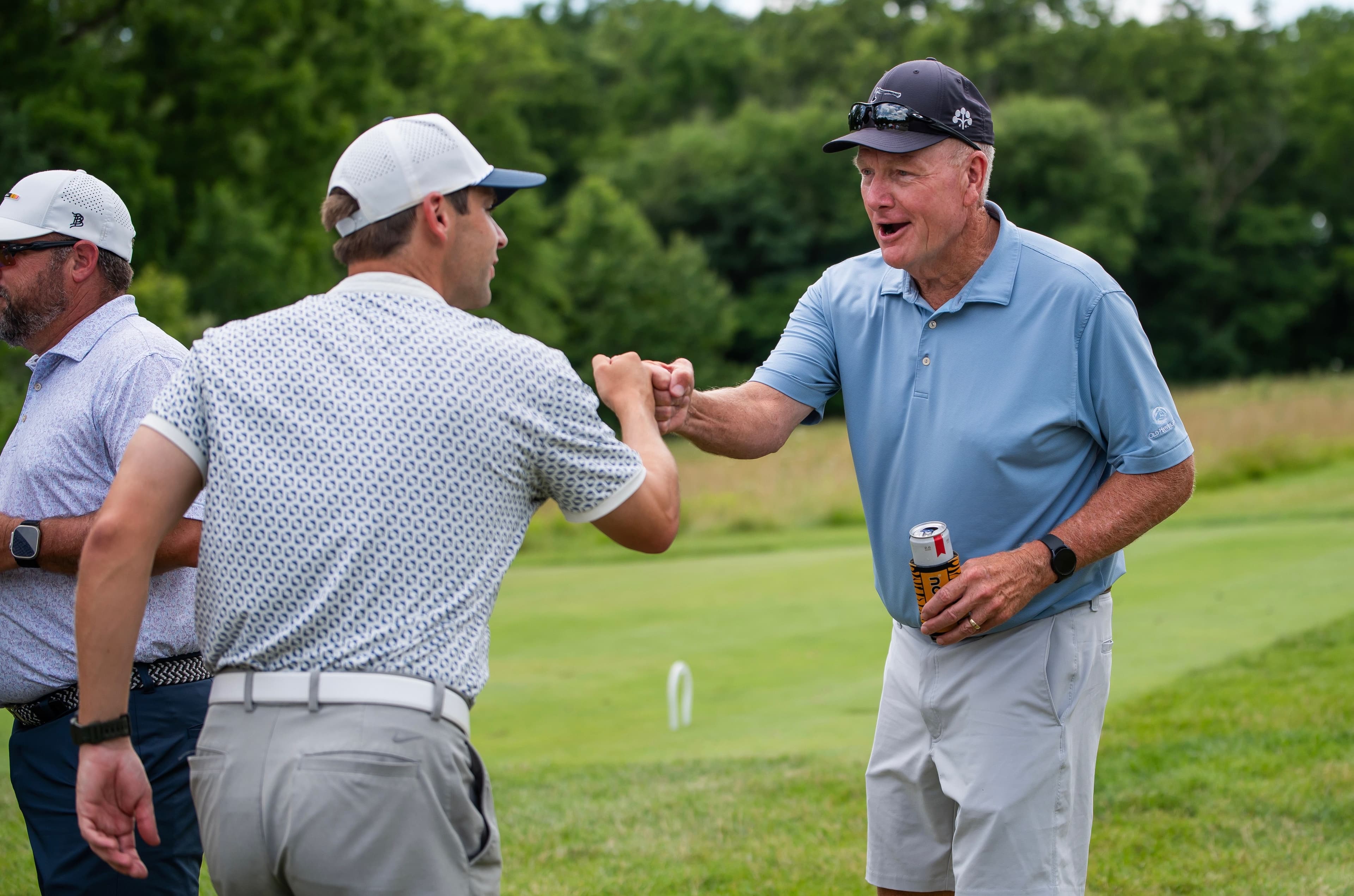
So, naturally, after driving it just short of the green on the first hole in our second match, Neys proceeded to thin his chip shot through the green. I had a 15-footer for birdie but didn’t have to putt after he chipped in for a birdie of his own. Our opponents made birdie as well, but after we lost the next hole, I got the match back to even with a two-putt par. It would become a theme for two guys who had been notorious for never having a lead. On the three occasions we trailed in a match, we won the next hole. And we never trailed in a match later than the second hole. What the hell was going on?
Neys birdied our eighth hole to secure the pivotal fifth point (and the additional point that comes with it), and when the last hole was halved with pars, we collected another 6½ points. We couldn’t have played much better; in fact, we were 3 under gross for the day. Our lead was 2½ points over the guys we would be playing in our first match on Friday, one of those teams with a scratch player.
We lost the second hole to fall 1 down, but I didn’t have to attempt my 12-footer at the next because Neys rolled in his own birdie putt from 20 feet. Two holes later, he hit it to kick-in distance to get us 1 up, but when our opponents answered with a net birdie, the match was all square again with three holes to play. My heart was racing. My 15 minutes came when I spent three weeks on the Mizzou golf team in the fall of 1977 (a story for another day) and am highly competitive, so it’s not like I hadn’t been there before. But I can’t remember the last time I felt this kind of adrenaline rush on a golf course. I was enjoying it. Kind of, anyway.
Travis Vogt, the other guest in our group, was the scratch player, one of those young bucks so strong he seemed unfazed by the gnarly rough that was a one-shot penalty for many of us. Travis’s tee shot at the par-5 missed left, but he effortlessly gouged his second into the fairway, and from 215 yards, he blistered a 5-iron to about 20 feet. Neys and I were playing two tees up and both getting a shot. He pulled his approach, and making a swing that screamed pressure, I fanned a 7-iron into the collection area right of the green, about 40 feet from the cup. A player with any semblance of a short game would’ve chipped it, but I immediately reached for my hybrid, choosing to bump it up the hill. From a tight lie, a chip had chunk written all over it. And it was all downhill past the hole, with water looming in the distance. I was surprised when my ball stopped 8 feet short, but as I am wont to say when I’ve hit a good shot I thought might turn out better than the result, I didn’t want to hit it again. Travis cozied his putt up for a conceded par. We were pretty much guaranteed a half, provided I didn’t do something stupid, but we were also three paces from a momentum-turning win.
Now, about that putting lesson: Frustrated to the point I thought it might be time to eschew the Scottie Cameron model that was a Stampede tee gift more than a decade ago, I scheduled a session with Craig Freeman, the outstanding teaching professional at Hackberry Creek, my home club. Before I left the house, I told Leigh that it might be time to invest $450 in a new blade. (Hey, Father’s Day was around the corner!) Craig got out his TrackMan, and we got to work. Among a litany of concerns, he didn’t think my eyes were far enough over the ball. I was lining up right and leaving the blade open at impact. I was not positioning the ball in the middle of the face. The toe of the putter was off the ground. He suggested I stand taller. He liked my claw grip—well, he was OK with it—but he wondered if I might be better served to roll the left hand under the grip, so as to neutralize that hand. “Does that feel weird?” he asked. It did. But I was willing to try anything, and lo and behold, I started stroking the ball better. When I walked into the house, I told Leigh I had good news: We had saved $400, the difference in the price of a putter vs. the cost of a lesson. Then I dragged my putter into the living room, and as I watched TV over the weekend, I got more comfortable with my newfound grip.
Neys can read putts as well as he can stroke ’em, and we agreed the putt was pretty straight. I settled in, positioned my left hand where it needed to be and pulled the trigger. The stroke felt oh-so smooth, and I gave a small fist pump as the ball disappeared. (At dinner that night, Travis said he saw me walking to my ball with hybrid in hand and thought: Damn I knew he wasn’t going to chip it. “And then you holed the putt.”)
I hit the same 7-iron at the next hole and produced one of my best swings of the week. What pressure? By this point, I was so engaged that Phillip Smith, Travis’s partner, said, “Hey, Mark, it’s OK to smile after hitting a shot like that.” I managed to crack a slight grin. We won that hole with a par, thanks to two more good looks, and the last on a concession. Another 7-3 win.
The lead had increased to three points, and when we took care of business with a 6-4 victory in our second match of the afternoon, the advantage had grown to 3½ points.
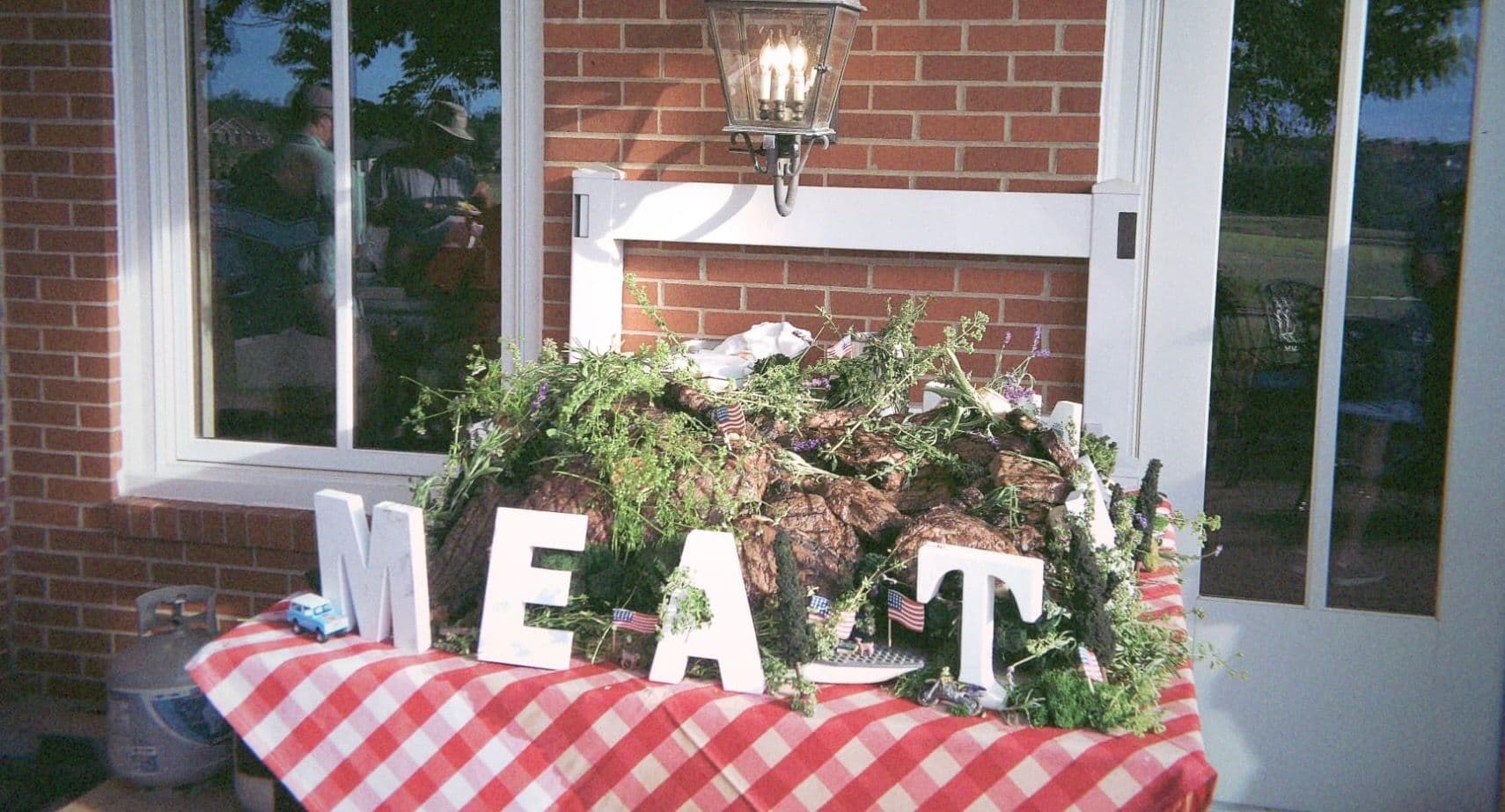
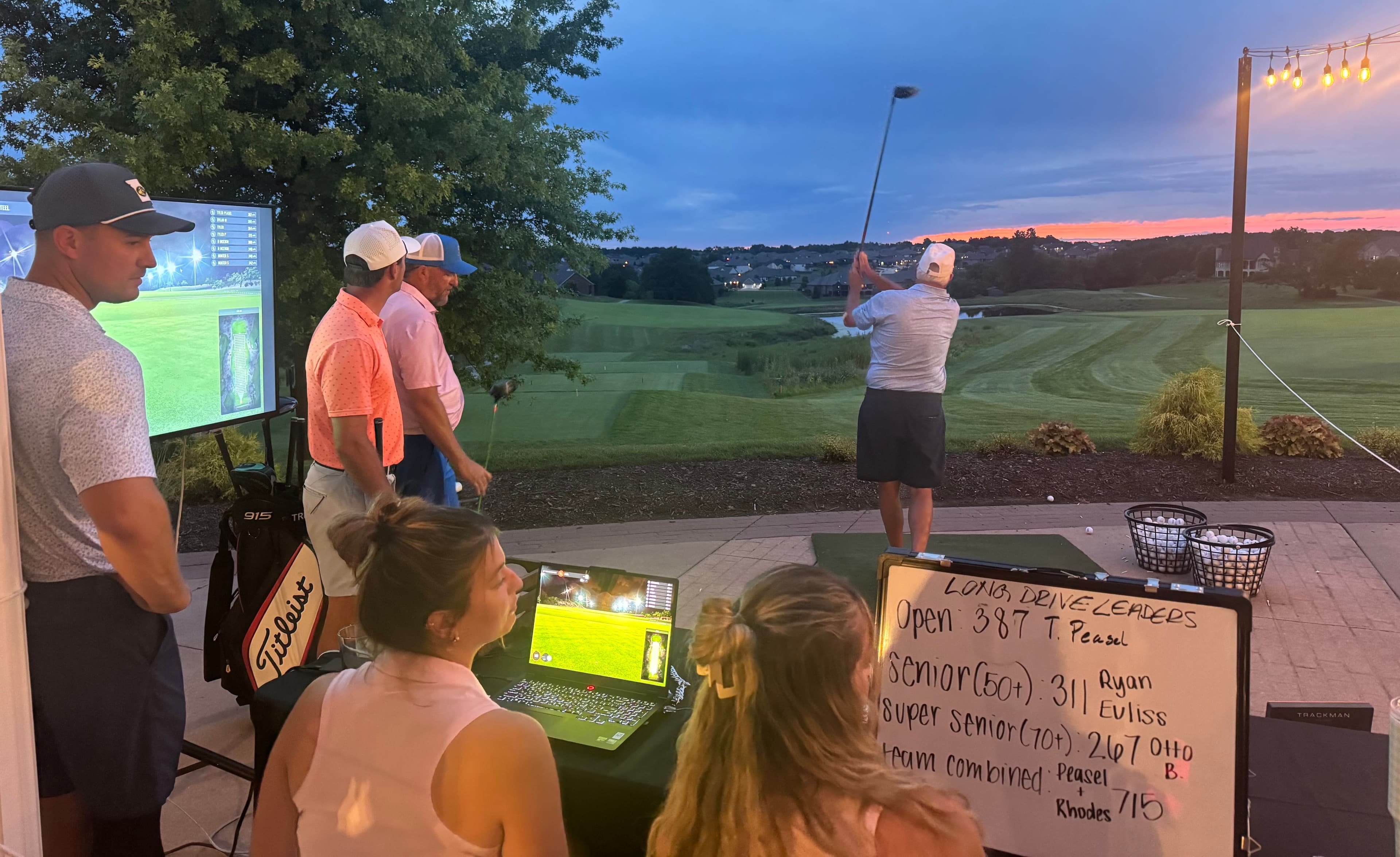
Friday is Steak Night at The Stampede: grilled ribeyes with all of the trimmings. Drinks are flowing and cigar smoke is wafting through the night sky. The clubhouse patio serves as the teeing ground to a long-drive contest down the 10th fairway and a chipping contest to an oversized cup on the 18th green. It is quite the scene. At one point early in the proceedings, I told Neys we might want to call it an early night. “Why?” he replied. “We don’t tee off until 9:30.” He was right. Part of the allure of The Stampede is what transpires off the golf course—the recollections, the reminiscing, the rules debates, the banter, the barbs. We might not have closed the place down, but we stuck around deep into the night. I’m glad we did.
Turns out it would have been foolish to bail early because I couldn’t get to sleep anyway. Yeah, we were 3½ points up, but we were playing the guys who had climbed into second and the other team with a scratch player. What if they got on an early run? And if we couldn’t close the deal this time, would we ever get another opportunity?
So of course we lost the first hole. But then we went on another run, winning the next four holes with a couple of pars, a net birdie and a birdie. By the time we walked off the seventh green, we knew we were Citation champions. We would win the flight in a runaway, by 5½ points, and were one of only three teams to win all five of their matches. After grinding so hard over 45 holes, we could finally take a breath. “We’ve got an afternoon tee time,” I told Neys as we climbed into the cart.
Upon reaching the tee box at the par-5 15th during our practice round, Vance turned to Neys, Ed and me and said, “I hope we’re all standing here on Saturday afternoon.” He was talking about the Horse Race, a 14-team alternate-shot free-for-all contested over four holes. In fact, the four of us had survived, Vance and Ed getting through only after winning the last hole in their last match. Vance and Ed vanquished Jason Hoffman, who said afterward it wasn’t a lot of fun competing against a good friend with so much on the line.
In the Horse Race, seven teams are eliminated on the first hole, four more on the second and one more on the third. The two teams left standing play the 18th to claim the title of Stampede champion and the crystal that comes with it. Ties are broken with a chip-off. A crowd of a hundred or more follows along in carts, drink wagons close by.
We agreed I would hit the tee shot on the 15th and the par-4 17th. We would play the watery par-5 as a three-shot hole, knowing we were getting a stroke and that a par (net birdie) should be good enough to advance. Assuming we got that far, I wanted Neys to hit the tee shot at the par-3 16th because that distance was right in his wheelhouse. A good drive at 17 would put him in his wheelhouse again for a short pitch shot. I didn’t like the tee shot at 18, and though I didn’t tell him, I wanted him to hole the birdie putt that would make us Stampede champions in front of the crowd around the green. Yes, I was thinking that far ahead. And yes, I was that confident. Over the course of 45 holes, I can’t begin to guess how many times one of us said to the other as he was pulling a club out of the bag, “Good swing here.” So as we rode to the 15th tee, I told Neys, “Eight more good swings. Just eight more.”
I produced my best 3-wood of the week off the tee, a gentle draw that found the right-center of the fairway. Neys bunted the second shot about 100 yards, leaving me 114 yards to a middle-left pin. It all seemed simple enough. The problem for this aging golfer is that I’m at a stage where I can play four or five quality holes, then hit a shot that looks like I’m a beginner. Case in point: I was looking at basically the same yardage I faced during the practice round and again on Friday afternoon. I fatted both of those shots into the junk short of the green. Don’t think that wasn’t in my mind as we discussed how we wanted to play the Horse Race. But this time I committed to a hard pitching wedge and, considering what was on the line, delivered the best swing I made all week. The ball never left the flag, stopping 30 feet past. Pure exhilaration.
The ensuing roar didn’t surprise me, because I know how popular Neys is around Old Hawthorne. I’m not exactly a stranger in these parts, having gotten to know two dozen or more members over the years, guys I consider good friends. But I knew who those cheers were for. I was simply drafting behind my best friend and soaking it all in.
I faced a 5-footer to guarantee us a swing on 16, a putt Neys read as relatively straight. I settled in and positioned my left hand where it needed to be. It was eerily quiet. The next thing I knew, I was walking after my ball before it had disappeared. Another roar ensued along with a fist bump from Drew Smith as I walked off the green. I was numb. What was happening?
We were the only team playing from the silvers on 16, and as we walked to the tee box, Neys turned and said with a laugh, “You can throw it on from here.” He wasn’t wrong. The pin was cut in the bowl toward the front of the diabolical green, about six steps beyond an ominous creek. There was a sideboard about 30 feet to the left and a backboard not far behind. There was no room to miss short and right. We measured the distance at 85 yards. It was about 20 paces to the white tees and probably another 10 to the blacks. Advantage, Citation champs.
But then the unimaginable happened. Neys missed the tee shot a little short and right. His ball died in the light breeze and dove into the penalty area. (Think Rory McIlroy on the 13th hole at the 2025 Masters.) There were gasps all around. As I waited on the tee while the futile search for the ball was underway, 52-degree wedge in hand, Mike Hackmann walked over. “You guys aren’t out of this,” he told me. “Oh, I know,” I replied. “I was thinking the same thing.” Only two teams had found the proper level of the green. Two other balls were in the hazard. Two teams were on the back tier, leaving impossible putts. Re-tee, stick it close, make bogey and we’re most likely in the chip-off. My knockdown shot landed a little long and left, climbed the slope and trickled back down, stopping almost directly behind the hole and about 10 feet away. I kicked myself for not getting the ball higher up the slope, so it could crawl closer to the hole. Neys didn’t see anything in the putt, and when he called me over, I didn’t either. But the putt slid right.
And that was that.
We popped a couple of beers and watched the 17th hole to see if Vance and Ed could advance. When they bowed out, we headed for the parking lot. Neys was beating himself up (“Swing the damn club!”), but I would have none of it. Give him 100 balls, and he would have put 99 of them not only on the green but also on the proper level. But that’s golf. It’s why we play this maddening game. I was beating myself up for not having the wherewithal to say, “Good swing here.”
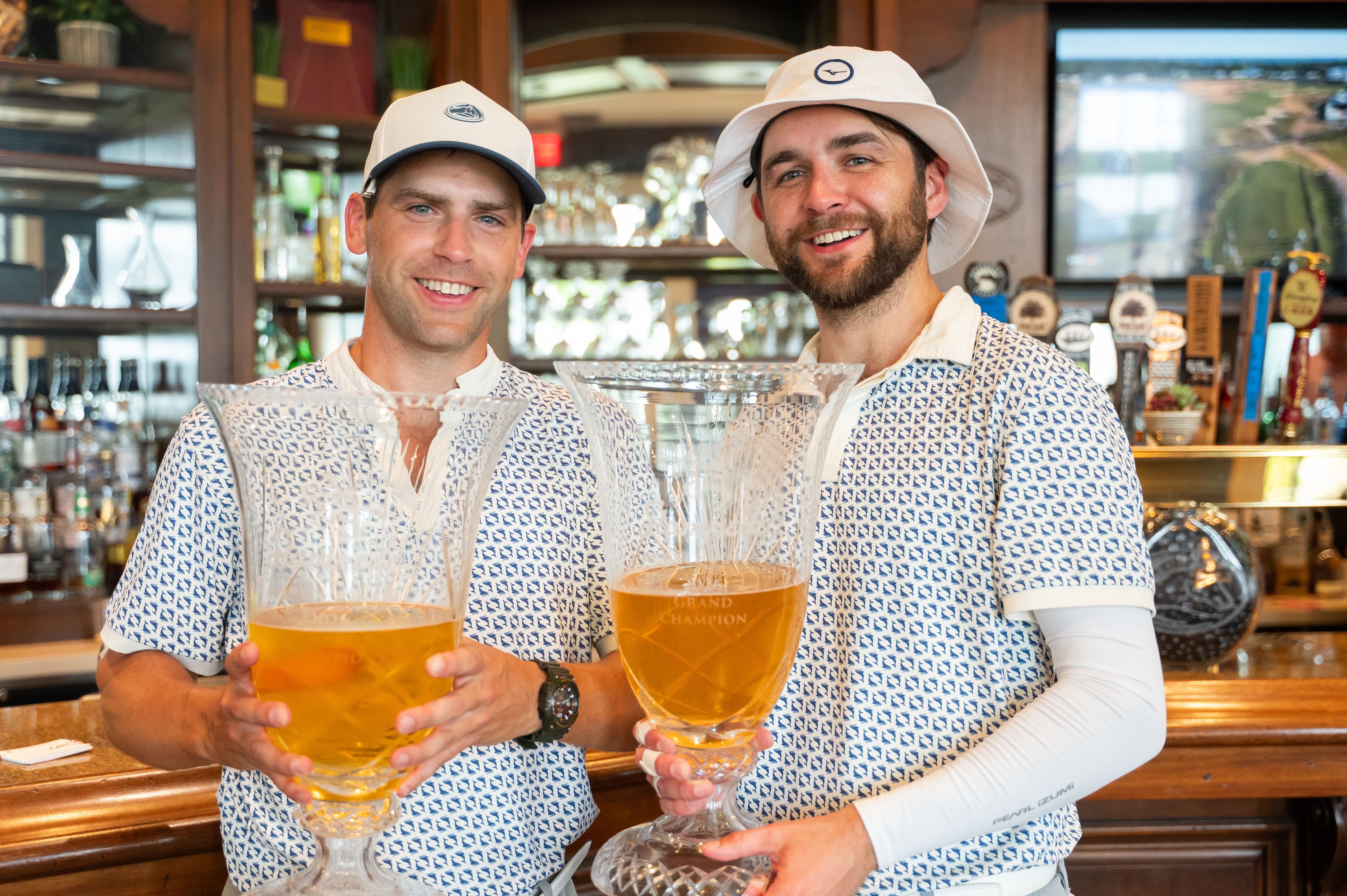
You need some luck to win the Stampede, and the two teams that got to 18 had a little. The Euliss brothers had to hole an 8-foot bogey putt at 15 just to get into the chip-off. The Scheib brothers got through 16 despite a three-putt bogey, not even needing to survive a chip-off to advance. The Scheibs captured the crystal after a second trip up 18. Worthy champions. They will have the honor of planning the menu for The Stampede welcome dinner in 2027.
I left Columbia grateful for the chance to participate and for the friendships I’ve made through the years. And I took great satisfaction in knowing that my best friend and I, two of the oldest competitors in the field, had outlasted all but three of 72 teams. The drive home went by quickly, because all of the wonderful moments I experienced kept running through my mind.
God willing, Leigh and I will be back next year. When we pack the SUV, we’ll make sure to leave room for the crystal.

Comments
...